
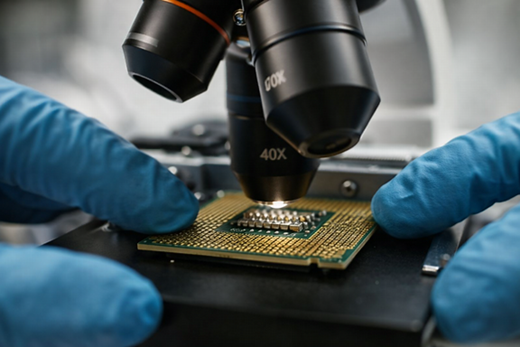
When people compare smartphones, they often focus on camera quality, screen resolution, battery capacity, and storage. However, one of the most important components inside a phone is its processor. The smartphone processor, often called the System-on-Chip (SoC), plays a major role in determining how quickly and smoothly a device performs everyday tasks.
Whether you are browsing websites, switching between applications, playing games, editing photos, or watching videos, the processor is constantly handling instructions in the background. Understanding how smartphone processors affect performance can therefore help buyers choose a device that matches their needs instead of simply selecting a phone based on specifications or brand name.
For readers interested in technology and smartphone-related information, TheTechyX.Com provides a useful place to explore more topics about modern technology, devices, and digital trends. Looking beyond the processor’s name, however, is important because several factors determine how a smartphone actually performs.
What Is a Smartphone Processor?
A smartphone processor is the main computing component responsible for executing instructions and managing many of the phone’s operations. Modern smartphones generally use an SoC rather than a processor that works completely on its own.
An SoC can combine several important components, including CPU cores, a graphics processing unit (GPU), an AI or neural processing unit, image-processing hardware, connectivity components, and other controllers. Bringing these functions together allows smartphones to deliver powerful performance while maintaining reasonable power efficiency.
The processor communicates with memory, storage, cameras, display hardware, and other components. This means its performance can influence almost every part of the smartphone experience.
CPU Cores and Everyday Performance
The CPU is one of the most important parts of a smartphone processor. It handles general computing tasks such as opening applications, processing commands, loading webpages, and managing background processes.
Modern smartphone CPUs commonly use multiple cores. Instead of relying on a single core for everything, the phone can distribute different workloads across multiple cores.
High-performance cores are designed to handle demanding tasks, while efficiency-focused cores can manage lighter workloads using less power. This approach allows a smartphone to respond quickly when necessary without constantly consuming maximum battery power.
For everyday users, CPU performance can affect how quickly apps open, how smoothly multiple applications run, and how responsive the operating system feels.
Clock Speed Is Not Everything
Clock speed is frequently used in smartphone processor comparisons, but it should not be treated as the only measure of performance.
A processor operating at a higher clock speed is not automatically faster than another processor with a lower clock speed. Architecture, CPU design, cache, core configuration, manufacturing technology, software optimization, and thermal management can all influence real-world performance.
For example, two processors may have similar clock speeds but deliver different results because one has a more efficient architecture or better memory management.
This is why comparing the complete processor design is more useful than looking at a single specification.
The Role of the GPU in Smartphone Performance
The GPU, or graphics processing unit, is particularly important for visual tasks. It processes graphics used by mobile games, animations, interfaces, video applications, and other demanding workloads.
Gamers are likely to notice differences in GPU performance more than casual smartphone users. A stronger GPU can support higher graphical settings, smoother frame rates, and more detailed game environments.
The GPU can also contribute to other activities such as video processing and certain AI-related workloads. As smartphone displays become faster and more sophisticated, graphics performance continues to play an important role.
RAM and the Processor Work Together
A powerful processor cannot operate independently of the phone’s memory. RAM provides temporary working space for applications and system processes.
When a smartphone has sufficient RAM and an efficient processor, it can keep more applications available in the background. This can make switching between apps feel smoother.
However, simply having more RAM does not guarantee better performance. The processor’s memory controller, operating system, software optimization, and memory management also matter.
For this reason, a smartphone with a balanced combination of processor architecture and RAM can sometimes provide a better experience than a device with more RAM but weaker overall hardware.
Processor Efficiency and Battery Life
Performance is not only about speed. Power efficiency is equally important for modern smartphones.
A processor that completes tasks efficiently can reduce the amount of energy required for everyday activities. More efficient chip designs can help phones deliver strong performance while limiting unnecessary battery consumption.
Manufacturing technology also has an influence. Smaller and more advanced semiconductor processes can allow manufacturers to improve efficiency, although the final result depends on the complete chip design.
This is particularly important for smartphones because users expect devices to remain responsive throughout the day without constantly requiring a charger.
Thermal Management Can Change Performance
Smartphone processors generate heat when performing demanding tasks. Gaming, video recording, navigation, and intensive multitasking can place sustained workloads on the chip.
If temperatures become too high, a smartphone may reduce processor and GPU speeds to control heat. This process is commonly known as thermal throttling.
As a result, a phone that performs extremely well during a short benchmark test may not maintain the same performance during a long gaming session.
Cooling systems, phone design, software controls, and the processor’s efficiency can therefore have a significant effect on sustained performance.
Why Benchmarks Do Not Tell the Whole Story
Benchmark applications can be useful when comparing processors because they provide standardized measurements. They can help demonstrate differences in CPU, GPU, and other areas.
However, benchmark scores should not be considered the complete picture.
Real-world smartphone performance depends on software optimization, application design, storage speed, thermal conditions, background activity, and many other factors. A phone with a slightly lower benchmark score may still feel faster in everyday use because its software is better optimized.
Consumers should therefore combine benchmark information with practical reviews and specifications rather than relying on a single score.
AI Features Are Increasingly Processor-Dependent
Artificial intelligence has become an increasingly important part of smartphone technology. Modern phones can use specialized hardware for tasks such as image enhancement, voice processing, translation, generative AI features, and computational photography.
Dedicated AI hardware can process certain workloads more efficiently than a general-purpose CPU. This allows smartphones to perform complex functions without placing all of the workload on the main processor.
The growth of on-device AI means processor design is becoming increasingly important beyond traditional speed measurements. Manufacturers are now considering how efficiently a chip can handle AI workloads while maintaining battery life and privacy.
For additional technical background on modern processor architecture, Arm’s official technology resources provide information about the processor architectures used across many computing devices.
Choosing the Right Processor for Your Needs
There is no single smartphone processor that is ideal for everyone. The best choice depends on how the phone will be used.
For basic users who mainly browse the internet, communicate through messaging applications, watch videos, and use social media, a mid-range processor may provide more than enough performance.
People who regularly edit videos, play demanding games, use advanced photography features, or perform intensive multitasking may benefit from a higher-end processor with stronger CPU and GPU capabilities.
It is also worth considering software support, battery efficiency, thermal performance, and the overall quality of the smartphone rather than choosing a device based only on processor branding.
Final Thoughts
Smartphone processors have a direct influence on speed, responsiveness, graphics, multitasking, AI capabilities, and energy efficiency. However, processor performance is determined by much more than clock speed or the number of CPU cores.
CPU architecture, GPU capability, RAM, software optimization, thermal management, and power efficiency all work together to shape the actual user experience.
For smartphone buyers, the best approach is to look at the complete hardware and software package. Understanding how processors work makes it easier to distinguish meaningful performance improvements from specifications that may look impressive on paper but have limited impact in everyday use.